The Cropping Myth: A Picture Does Not Speak for Itself
Image cropping changes what a photograph seems to say. Learn to read its edges, spot missing context, and judge how framing shifts emphasis.
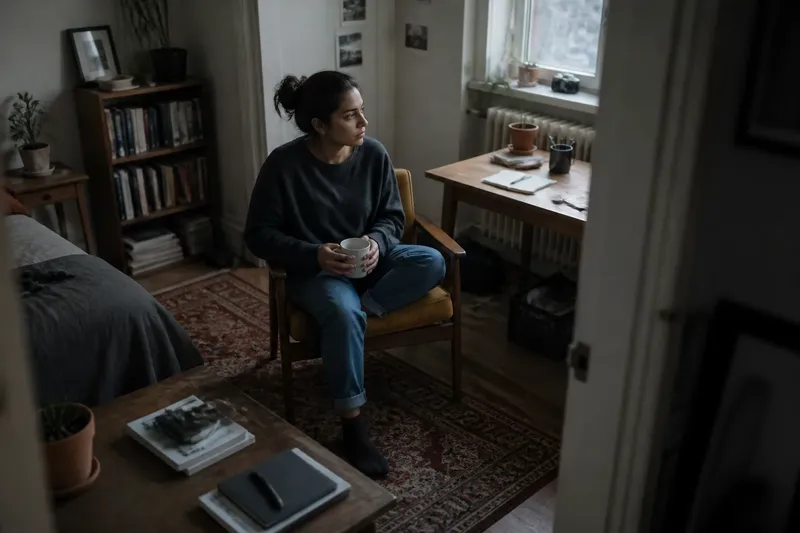
Image cropping changes what a photograph seems to say before a viewer has time to name the subject. A tight crop around a person can make a quiet moment feel confrontational; include the surrounding room and the same face may seem lost, observed, or at ease. The visible edges are not a neutral container. They are part of the image’s argument.
This does not mean every crop is deceptive, or that an uncropped photograph tells the whole truth. A camera already selects a view, and a photographer decides where to stand and when to press the shutter. Cropping makes that selection easier to see—and easier to mistake for the complete scene.
What does a photograph’s frame actually include?
The frame marks the boundary between what the image shows and what it leaves out. It gives the viewer a bounded field of evidence: a person, object, gesture, or setting, but not the whole place or sequence in which that subject existed.
Imagine a photograph of a person holding a paper sign. A tight frame may show the person and a few words. A wider frame might also include a line of people, an empty sidewalk, or the edge of a television camera. Those details can change what the sign appears to represent. Yet even the wider view remains selective; it does not show what stands behind the photographer or what happened just before the shutter clicked.
The frame works a little like a window with a movable shade. Shifting the shade changes what is visible, but the newly exposed view does not become the whole building. Readers should ask what the frame gives them, then remember that the scene extends beyond it.
How does cropping change the meaning of an image?
Cropping changes meaning by changing relationships. It can make a subject larger relative to the page, remove surrounding objects, cut off a gesture, or place a face close to another figure. Each change adjusts what seems important and how the viewer interprets the scene.
A close crop often increases intensity because facial expression and small details occupy more of the viewer’s attention. It may also remove the context that would make that expression easier to understand. A person looking sideways could appear suspicious when isolated; in a wider photograph, the same glance might clearly be directed toward someone speaking nearby.
Crop decisions also affect scale. A small object can appear dominant when the frame excludes everything around it, while a person can seem insignificant when surrounded by a broad landscape. Neither presentation is automatically dishonest. Both direct attention, and a reader can notice that direction without claiming to know the editor’s intent.
Even the edges themselves carry signals. A cut through a hand, chair, or doorway can make the scene feel abrupt or crowded. Leave a little space around the subject and the image may feel calmer. The difference is not merely decorative: it affects whether the viewer reads an action as complete, interrupted, or uncertain.
Can a crop make a true photograph misleading?
Yes. A photograph can show something that genuinely appeared in front of the camera while the selected crop encourages an inaccurate conclusion about its scale, cause, or surroundings. Truth in the visible details does not settle the meaning of the composition.
Consider a crowded-looking street. A tight crop could exclude open pavement nearby, making a small cluster seem to fill the block. A wider frame might alter that impression. The close view is not necessarily fabricated; the misleading effect comes from treating a partial view as sufficient evidence for a larger claim.
That distinction matters when images accompany reporting, advertising, political messaging, or claims about a public event. A crop may direct attention toward a relevant detail, but readers should be wary when a strong conclusion depends on what the frame does not show. The more consequential the claim, the more useful it is to look for the original image, a wider view, or independent context.
There is no reliable rule that a wide image is honest and a tight one is suspect. A wide frame can still omit what matters, and a close crop can accurately clarify a detail. The better question is whether the framing supports the conclusion being drawn, or merely makes that conclusion feel obvious.
What should you inspect at the edges of a crop?
Start with the boundaries, not just the center. Ask what is cut off, what remains partially visible, and whether an edge interrupts an object or action in a way that shapes the scene.
- Cut-off people: Does a partial figure suggest a crowd, a companion, or a threat, and can the image support that reading?
- Hands and gestures: Is a hand pointing, holding, reaching, or simply cropped out before its purpose becomes clear?
- Objects at the border: Could a sign, tool, phone, or vehicle provide context that the crop only hints at?
- Empty space: Does open ground or wall make the subject seem isolated, small, or unusually prominent?
- Interrupted structures: Do doorways, furniture, or street features suggest a setting that the frame otherwise conceals?
- Uneven margins: Is the subject pressed against one edge, and does that make the image feel tense, directional, or incomplete?
These questions do not reveal a hidden, definitive version of events. They show where the image asks the viewer to supply information. That is a useful distinction: noticing an omission is not the same as proving what lies outside the frame.
How can you compare two crops of the same photograph?
Compare what each version includes, not only which one looks more dramatic. Put the images side by side if possible, then track how the subject’s size, position, and relation to nearby details change. A crop can alter emphasis even when the central subject remains identical.
Say you see two versions of an invented photograph of a cyclist beside a damaged bicycle. The first crop includes the cyclist, the bent wheel, and a stretch of empty road; the second includes a second bicycle and another person at the edge. The first may suggest a solitary mishap, while the second invites questions about company or a shared event. Neither view establishes what happened, but their different boundaries make different interpretations easier to reach.
When comparing versions online, check whether they come from the same photograph rather than similar shots taken moments apart. Small changes in posture or timing can affect meaning independently of the crop. Captions and publication context matter too: a caption can narrow interpretation, but it cannot restore details removed from the image.
Why do captions and image sources matter?
Captions tell readers how a publisher wants an image understood. They may identify a place or person, describe an event, or connect a photograph to an argument. A caption is useful context, but it is not a substitute for the frame—or for knowing where the image came from.
When the source is available, an original file or a larger version can show whether the published crop excludes relevant surroundings. A photo credit may help identify the photographer or agency, while an archive or original post may provide a caption and date. These traces do not settle every question, but they let readers distinguish the picture’s visible content from the account attached to it.
Be cautious about treating a cropped image shared without a source as self-explanatory. It may have been resized, recomposed, or paired with a new caption after leaving its original context. If the claim attached to it is serious, seek a fuller source before relying on the image alone.
What questions help you read a cropped image?
Does a tight crop always hide important context?
No. A close frame can clarify a relevant detail, such as a label or expression, without concealing anything needed for the claim being made. The useful question is whether the missing surroundings could reasonably change the interpretation.
Is the original, uncropped photograph more objective?
Not necessarily. The photographer has already chosen a viewpoint, moment, lens, and frame, and a wider image can still leave out much of the scene. An original file may offer more context, but it is not a view from nowhere.
Can a crop change how large a crowd or object appears?
Yes. Removing open space or neighboring objects can make a subject fill more of the image, while including a broad setting can make it look smaller. The crop changes the visual impression, though it does not by itself establish the actual scale.
How can I tell whether an image has been cropped?
Look for a larger source, an alternate publication, or a version with visible surroundings. If none is available, examine the edges for interrupted objects and avoid treating the image as complete evidence of the wider scene.
What does a careful reading of image cropping look like?
A careful reading separates three things: what is visibly present, what the composition emphasizes, and what a caption or accompanying claim asks the viewer to infer. That separation keeps observation from quietly turning into certainty.
For instance, “the frame shows two people near a doorway” describes visible content. “The crop centers one person and excludes most of the room” describes a compositional choice. “The person is being detained” is a claim about the event and needs support beyond the crop if the image does not make it clear.
Use that distinction whenever an image feels unusually persuasive or unsettling. Look at the subject, then move your attention to the borders. Ask what the crop makes easy to notice, what it makes difficult to see, and whether the conclusion depends on either choice.
Image cropping is not a verdict on a photograph’s honesty. It is a reminder that pictures arrive through choices, including the choice of where the visible edges fall. Reading those edges carefully helps you take an image seriously without mistaking its partial view for the entire scene.